
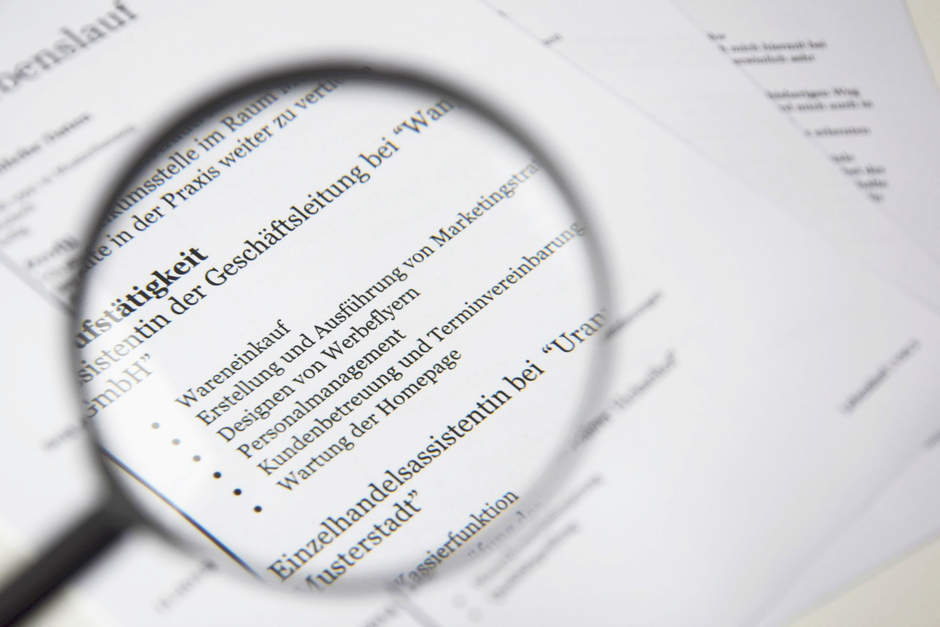
Think about the last ten candidates you interviewed. Statistically speaking, at least six of them weren’t completely honest on their resume. That’s not a cynical assumption — a 2024 study by StandOut CV found that 64.2% of employees have lied about skills, experience, or references at least once, up from 55% just two years earlier.
This isn’t really a story about dishonest candidates, though. It’s a an article bout risk — the kind that quietly accumulates inside your organisation every time a hire goes unchecked. For HR managers across IT, healthcare, finance, BPO and virtually every other sector, understanding the anatomy of resume fraud isn’t optional anymore. It’s part of the job.
Before we get in to the topic, you can check out the podcast as well:
Why Candidates Lie — And Why It’s Getting Worse
The instinct is to frame resume fraud as a moral failing. But the reality is more complicated than that.
The StandOut CV research found that 56% of respondents said rising costs and inflation would make them more likely to lie on a resume in order to secure a better-paying position. When people are under financial pressure, the risk calculus shifts. A fabricated job title or an inflated skill set starts to feel like a calculated bet — not a character flaw.
At the same thime the job market isn’t helping. Candidates are increasingly competing against hundreds of applicants for a single role. One study found that a typical online job posting attracts around 250 resumes. In that environment, embellishment becomes a survival strategy for many people, whether or not they’d admit it.
And now there’s AI. Google searches for “AI resumes” were up 1,592% in 2023 compared to the previous year. Nearly three-quarters of candidates (72.4%) said they would consider using AI tools to help lie on a resume in 2024. We’re not talking about polishing grammar here. We’re talking about generating plausible-sounding work histories, fabricating references, and producing credentials that look legitimate at a glance.
The technology has lowered the barrier to fraud significantly. What used to require real effort now takes ten minutes.
The Five Most Common Resume Lies — And What They Actually Cost You
Not all resume lies are created equal. Some are relatively minor. A candidate rounds up a 3.4 GPA, or describes themselves as proficient in a tool they’ve only used a handful of times. Others are fundamentally deceptive in ways that create real operational, legal, and financial exposure for your organisation.
Here are the five categories that surface most consistently in background screening work:
1. Inflated Work Experience
This is the most common category. Candidates add responsibilities they observed rather than owned, describe projects they contributed to peripherally as if they led them, or claim expertise in areas they were only adjacent to. A 2023 ResumeLab survey of 1,900 workers found that 7 in 10 admitted to lying on their resumes, with inflated skills and responsibilities ranking as the most frequent misrepresentations.
For HR managers, this is the lie that tends to surface three to six months into someone’s tenure, when the day-to-day realities of a role start to outpace what a person can actually deliver. By then, you’ve already invested onboarding time, training costs, and team resources into someone who wasn’t qualified to begin with.
2. Employment Dates
Short tenures get extended. Gaps get compressed. A candidate who was dismissed after four months might show six on their resume. Someone out of work for a year might compress that period into a few weeks. The migratory workforce trend has made this more common, not less ,more job moves means more gaps to cover.
Employment date discrepancies are often treated as minor administrative errors. But they can signal instability, termination for cause, or a period a candidate knows won’t hold up under scrutiny. That’s worth knowing before you extend an offer.
3. Job Titles
“Senior Manager” on the resume, individual contributor at the company. “Project Lead” when the candidate was one of eight people on a team. Job title inflation is common because it’s genuinely hard to verify at a glance, especially when a former employer no longer exists, has been acquired, or operates a loose verification policy.
In industries like IT and fintech, where seniority carries significant salary weight, a fabricated title can distort compensation expectations by 20 to 30%. You end up benchmarking an offer against a career trajectory that was never real.
4. References
This one is more sophisticated than most HR managers expect. StandOut CV’s research found that 25.4% of candidates have misrepresented their references. Of those, 37.3% used friends or family members posing as former managers, 35% invented contacts entirely, and 18.5% paid for professional fake reference services ,including call-centre-style operators prepared to impersonate HR departments.
The organised fake reference industry has contracted since 2022, partly due to crackdowns. But informal reference fraud, a friend taking a call, a sympathetic former colleague overstating a role, remains widespread and almost impossible to detect without proper independent verification.
5. Education and Credentials
A candidate who completed two years of a four-year degree might list the institution without mentioning they didn’t graduate. A professional certification may have expired, been revoked, or never been obtained. In some cases, particularly in healthcare, legal, and financial services, credentials are outright fabricated.
The assumption that employers will check is often the only deterrent. When verification steps are skipped, that deterrent disappears entirely.
Summary: Most Common Resume Lies by Category
| Lie Category | How It Shows Up | Sector Risk |
| Work Experience | Inflated responsibilities, skills not held | All sectors, especially IT, BPO |
| Employment Dates | Gaps compressed, tenures extended | Finance, healthcare, management roles |
| Job Titles | Fabricated seniority, self-promoted titles | IT, fintech, senior hiring |
| References | Fake contacts, coached friends, paid services | All sectors |
| Education & Credentials | Incomplete degrees, fake certifications | Healthcare, legal, finance, engineering |
The Real Cost of Getting This Wrong
It’s tempting to frame resume fraud as an inconvenience , the wrong person in a role, a performance conversation you didn’t want to have. But the financial reality is harder than that.
According to the U.S. Department of Labor, a bad hire can cost up to 30% of the employee’s first-year salary. For an £50,000 or $80,000 role, that’s a floor of £15,000 or $24,000 before you account for lost productivity, team disruption, and the cost of starting the hiring process over again.
SHRM puts the replacement cost considerably higher: between 50% and 200% of annual salary, depending on the seniority and specialisation of the role. For a senior manager or technical specialist, that number can comfortably exceed six figures.
The financial cost is actually the easier part to quantify. Here’s what doesn’t show up on a balance sheet:
- Team morale: A LinkedIn survey found that 85% of hiring professionals reported a bad hire negatively affected the entire team. When colleagues spend time correcting mistakes, covering gaps, or absorbing someone else’s workload, burnout follows quickly.
- Client trust: In customer-facing roles, one wrong hire can undo years of relationship-building. A missed deadline, a knowledge gap surfacing at the wrong moment, an unprofessional interaction — these don’t stay internal.
- Legal and regulatory exposure: In regulated industries, an unverified credential can constitute a compliance breach. In healthcare, an unlicensed practitioner creates direct liability. In financial services, a candidate with an undisclosed regulatory sanction can put your firm’s authorisation at risk.
- Time: Research by The Josh Bersin Company found the average time to hire is at an all-time high of 44 days. A bad hire requiring replacement means starting that 44-day clock again, on top of the weeks or months spent managing out the wrong person.
And yet, more than 10% of companies in one survey admitted they conducted no background checks whatsoever. That’s rarely a resource problem. It’s a risk prioritisation problem.
Industry-Specific Risks: Why Context Matters
Resume fraud doesn’t affect all industries equally. The nature of the work determines what’s actually at stake when the wrong person gets through.
IT and Technology
Technical skill sets are genuinely hard to verify from a CV alone. A candidate can list ten programming languages and two cloud certifications and still be unable to deliver production-ready work. Beyond performance risk, unverified technical hires in fintech or infrastructure environments can create serious security vulnerabilities. In some documented cases, what appeared to be a bad hire was a deliberate infiltration attempt by a bad actor seeking system access.
Healthcare
This is the sector where credential fraud carries the most direct human risk. A nurse who exaggerated clinical experience, a care worker with an undisclosed criminal record, a practitioner operating without a valid licence , these aren’t hypothetical scenarios. They are cases that reach employment tribunals and regulatory bodies every year. Healthcare organisations have the lowest tolerance for unverified hires, and rightly so.
Banking and Financial Services
Regulatory frameworks in the UK and Romania both require specific background checks for roles with client-facing or fiduciary responsibility. An FCA-regulated firm that employs someone without completing the relevant checks doesn’t just face a bad hire, it faces a regulatory breach. The same applies to anti-money laundering roles, compliance functions, and senior management positions under SMCR.
BPO and Outsourcing
High-volume hiring environments are uniquely vulnerable to resume fraud precisely because scale makes thorough individual checks feel impractical. But BPO roles frequently involve access to client data, financial systems, or personal information. A hiring process that skips verification at volume is a risk process that compounds at volume.
What Background Screening Actually Catches
“Background check” is a term that gets used loosely. For some organisations it means a single reference call. For others, a criminal record check. A comprehensive background screening process covers considerably more ground than either.
The areas that surface the most discrepancies:
- Employment verification: Confirming dates, job titles, and reason for leaving with previous employers directly — not via the candidate’s listed references, but through independent contact with HR or line managers.
- Education verification: Confirming degree completion and classification with the issuing institution. Online degrees and international qualifications require specific verification routes and can’t be taken at face value.
- Criminal record checks: Standard DBS checks in the UK, or equivalent processes in Romania, for roles that require them. Enhanced checks for positions involving vulnerable adults, children, or regulated financial activities.
- Professional licence and certification checks: Confirming with the relevant regulatory body that a licence is current, valid, and free of sanctions. Non-negotiable in healthcare, legal, and financial services.
- Reference verification: Going beyond the candidate’s chosen referees to independently verify employment history. This is where coached or fabricated references tend to fall apart.
- Credit and financial checks: Required for roles with financial authority, particularly in banking, accounting, and treasury functions, or where the position provides access to funds or sensitive financial data.
The point isn’t to assume every candidate is lying. Most aren’t. The point is that the ones who are tend to apply for the same roles as everyone else, and without verification, you can’t tell them apart.
What You Can Do Right Now: A Practical Checklist
You don’t need to overhaul your entire recruitment process to reduce your exposure meaningfully. These are the steps that make the biggest practical difference:
- Standardise your verification steps by role category. Not every hire needs the same depth of screening, but every role type should have a defined minimum standard — documented and applied consistently.
- Always verify employment dates and titles independently. Don’t rely on what’s written on the resume. Contact the employer directly, not via the contact provided by the candidate.
- Check credentials with the issuing body, not the candidate. A certificate someone can scan and email is not verification. Call the institution or use their official online verification portal.
- Don’t skip verification steps because a hire feels urgent. Time pressure is the single most common reason organisations cut verification corners — and it’s also how the worst hires get through.
- Document your verification process for every hire. Verification records protect you legally and create an audit trail if discrepancies surface later in the employment relationship.
If the volume or complexity of your hiring makes internal verification impractical to maintain consistently, working with a specialist background screening provider is the most efficient way to protect standards without adding headcount.
A Final Thought
There’s a version of this conversation that frames background screening as a defensive, box-ticking exercise. That framing misses the point.
The organisations that take verification seriously aren’t just protecting themselves from bad hires. They’re building hiring processes that consistently surface the people who are actually qualified, which means better teams, lower turnover, and hiring managers who can trust the information in front of them.
Since 2013, Mindit Consulting has been supporting organisations across Romania, the UK, and beyond with pre-employment background screening across all major sectors. We verify employment history, education, professional credentials, references, and more, giving HR teams a clear, accurate picture of every candidate before an offer is extended.
If you’d like to understand what verification looks like for your specific industry and hiring context, you can find us at office@mindit.ro .